 Afield
In this article
A useful case study lets the reader reconstruct the result. Begin with the task, retain the measurements and write the headline from those records.
Demo: the team, workflow change and times below are fictional teaching material, not Afield customer results.
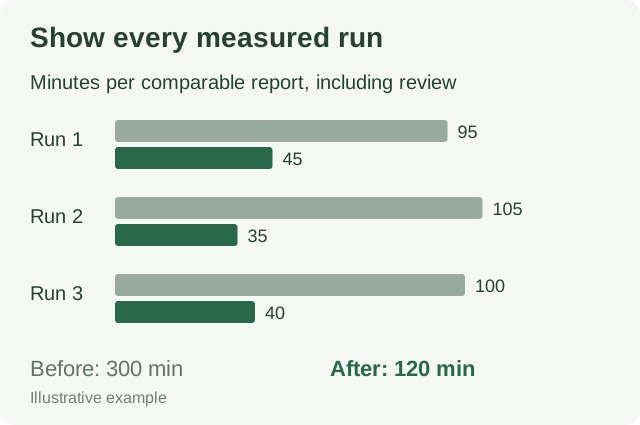
The measurement sheet
The task is to prepare the same weekly account report, from opening the source export to approving the corrected report. Both periods include checking accounts, renewal dates and exceptions. In this example, the workflow change replaces manual assembly with a reusable report template; human checking remains.
| Comparable report | Before, including review | After, including review |
|---|---|---|
| 1 | 95 min | 45 min |
| 2 | 105 min | 35 min |
| 3 | 100 min | 40 min |
| Total | 300 min | 120 min |
Time released = 300 − 120 = 180 minutes across three reports
Reduction = (300 − 120) ÷ 300 × 100 = 60%
After range = 35–45 minutes per report
Pairing only 105 minutes with 35 would produce 66.7%, which describes the selected extremes rather than the combined work.
A finished case-study block
Demo: three weekly reports took 120 minutes instead of 300
An account team moved its weekly reporting from manual assembly to a reusable template. Across three comparable reports, preparation and review took 120 minutes after the change, compared with 300 minutes before.
The template standardized the account fields and brought exceptions into one review queue. The account owner still checked renewal dates and corrected the final document. Individual reports took 35–45 minutes after the change, compared with 95–105 minutes before.
That released three hours across the observed reports. It describes this small example’s reporting task; it does not establish a company-wide productivity gain or a payroll reduction.
Collect the five things that support a real version
| Keep with the draft | What to inspect |
|---|---|
| Task boundary and period | Same accounts, fields, start/end points and approval requirements. |
| Time source | Timer or system record; label a customer recollection as an estimate. |
| Before/after artifacts | Make sure a check was not silently omitted or moved to another person. |
| Changes and exceptions | Record setup work, staffing changes or unusual repairs that affect the comparison. |
| Approved publication | Customer approval of the exact attribution, quote and scoped calculation. |
If the customer says “about half a day,” retain that wording instead of converting it into an exact decimal percentage. If a review step moved to someone else, include their work in a claim about total team effort.
Download the baseline worksheet (CSV). Keep the source records with the approved passage; public readers can receive a redacted measurement table. When the scope changes during approval, update the headline, excerpt and metric card together. Use the quotation workflow for customer wording and the cost worksheet before turning released time into a monetary claim.